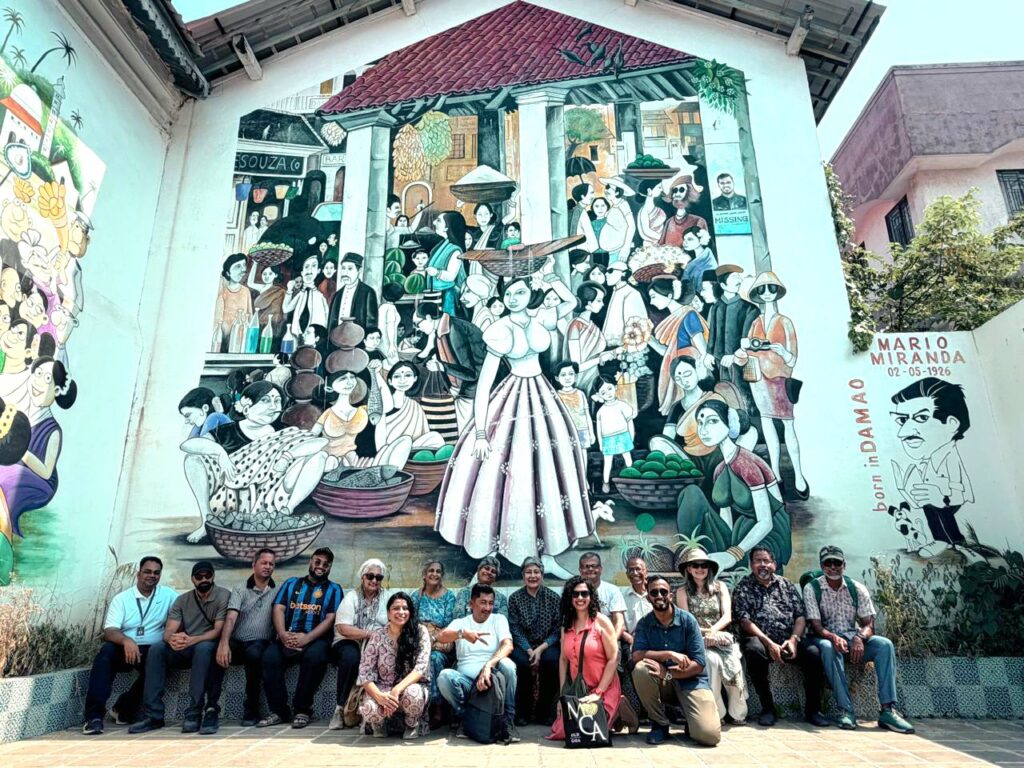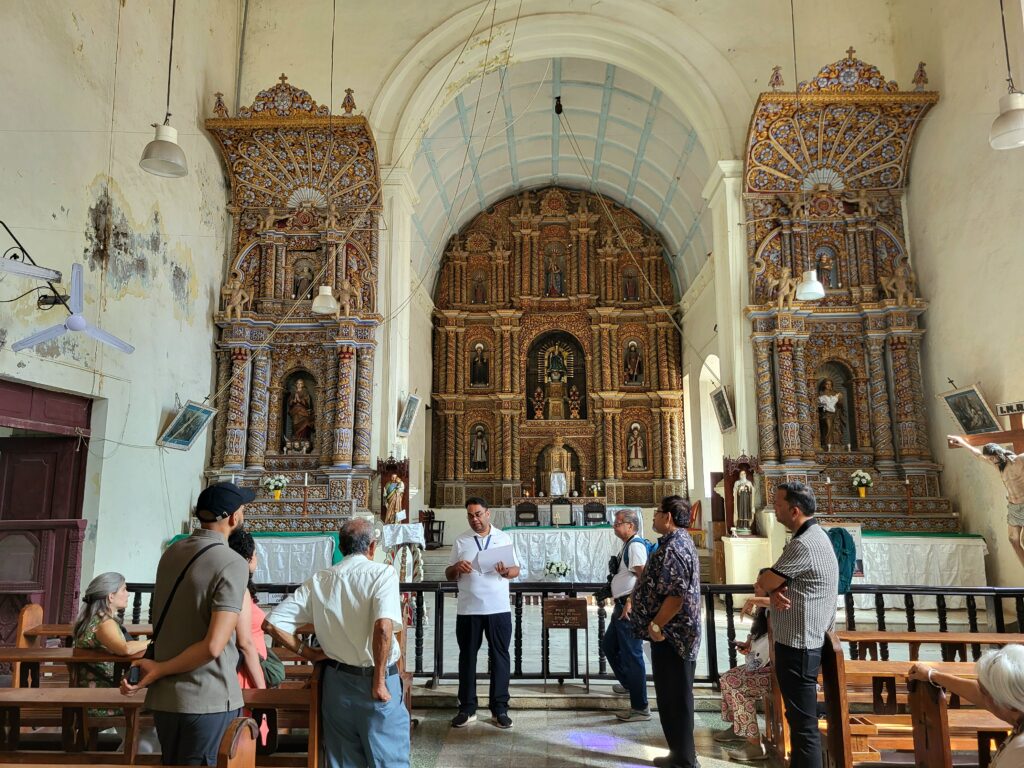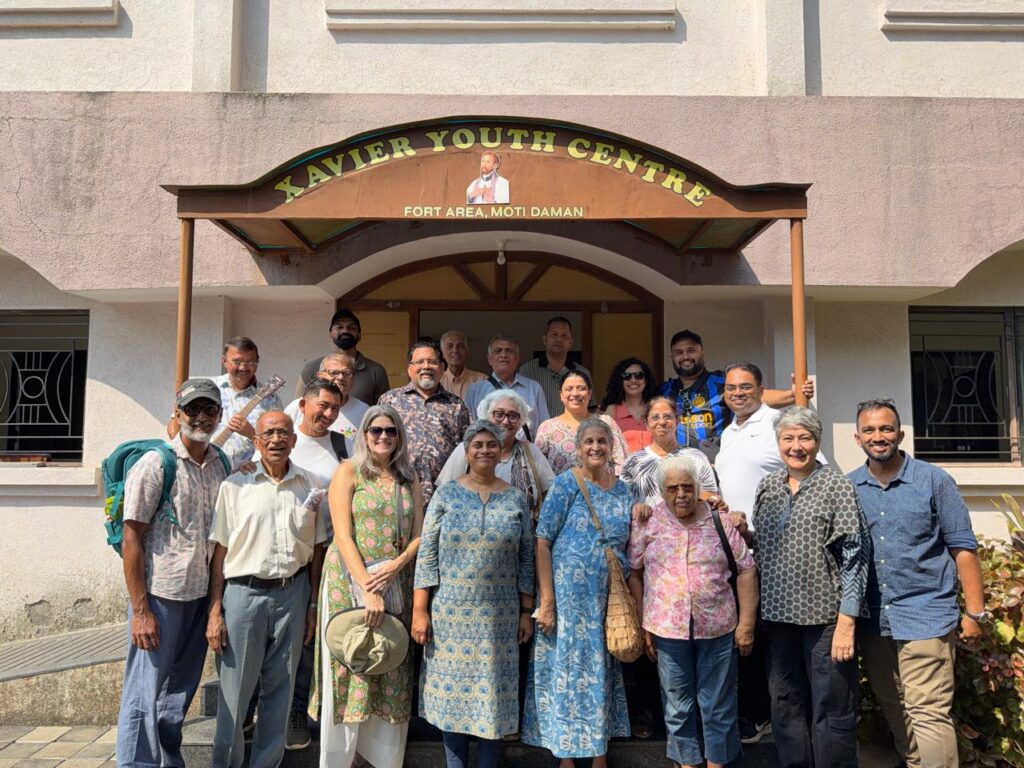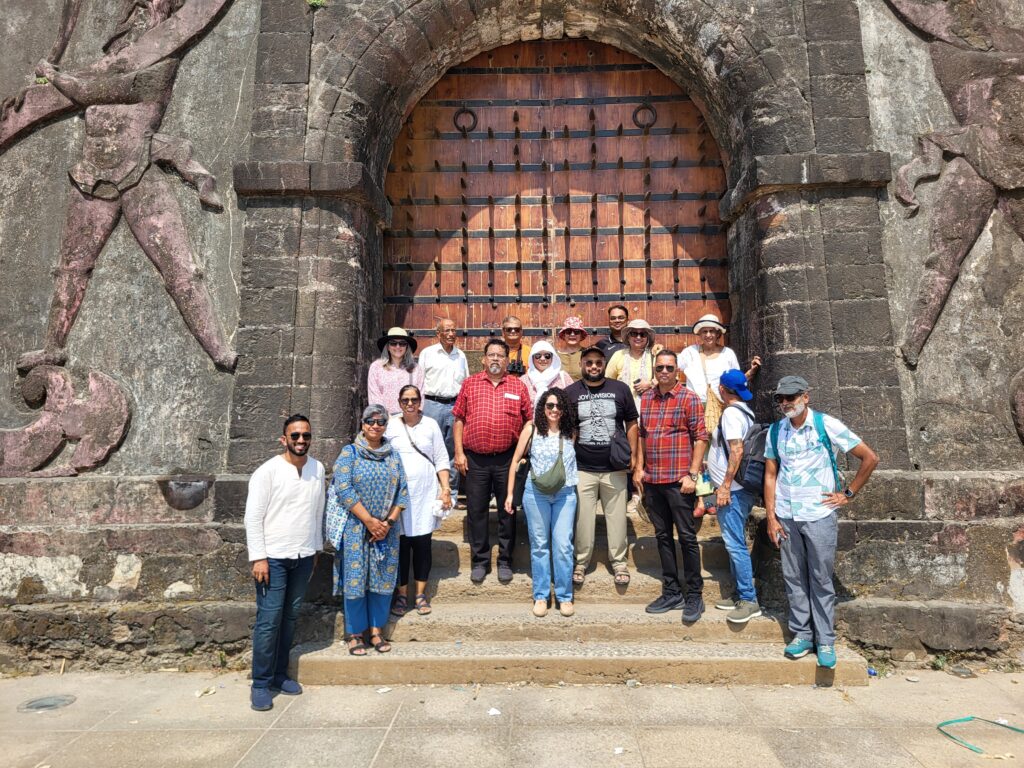
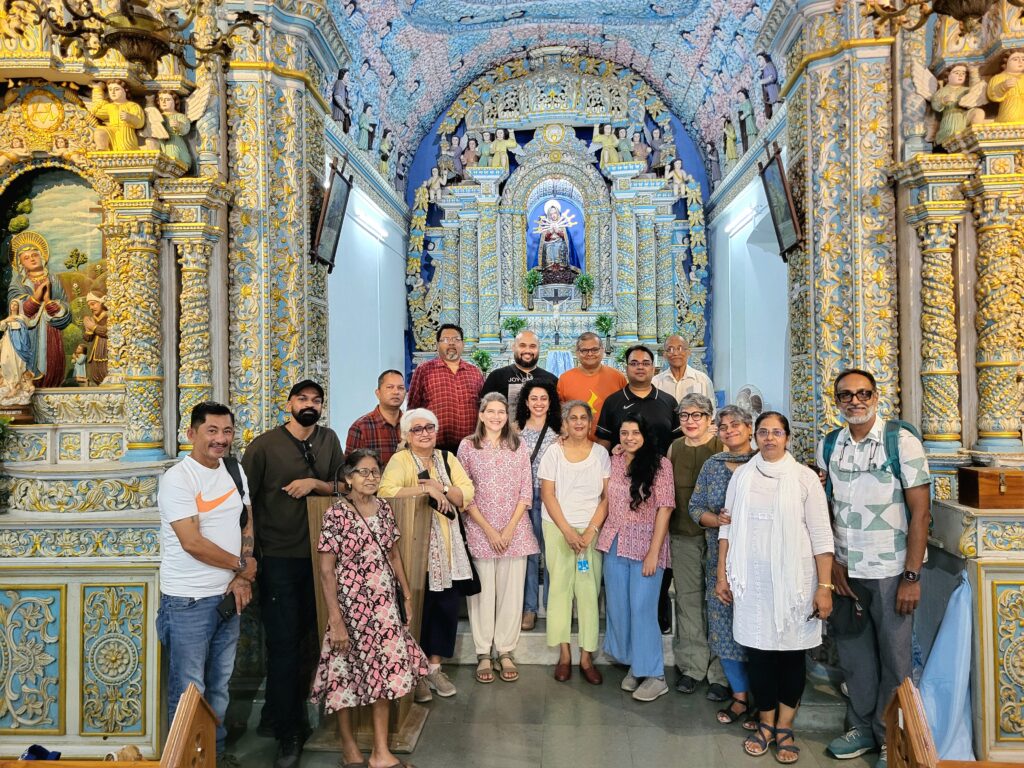
The Museum of Christian Art (MoCA), Old Goa, concluded its Heritage Tour of Daman, held from 11 to 15 October 2026. The tour took a group of heritage enthusiasts through the churches, chapels, forts and streets of Moti Daman, Nani Daman and Udvada. The initiative reflects MoCA’s commitment to highlighting the treasures of Indo-Portuguese Christian art in Goa and beyond, and to fostering awareness of history, culture and conservation across the former Portuguese territories of India.
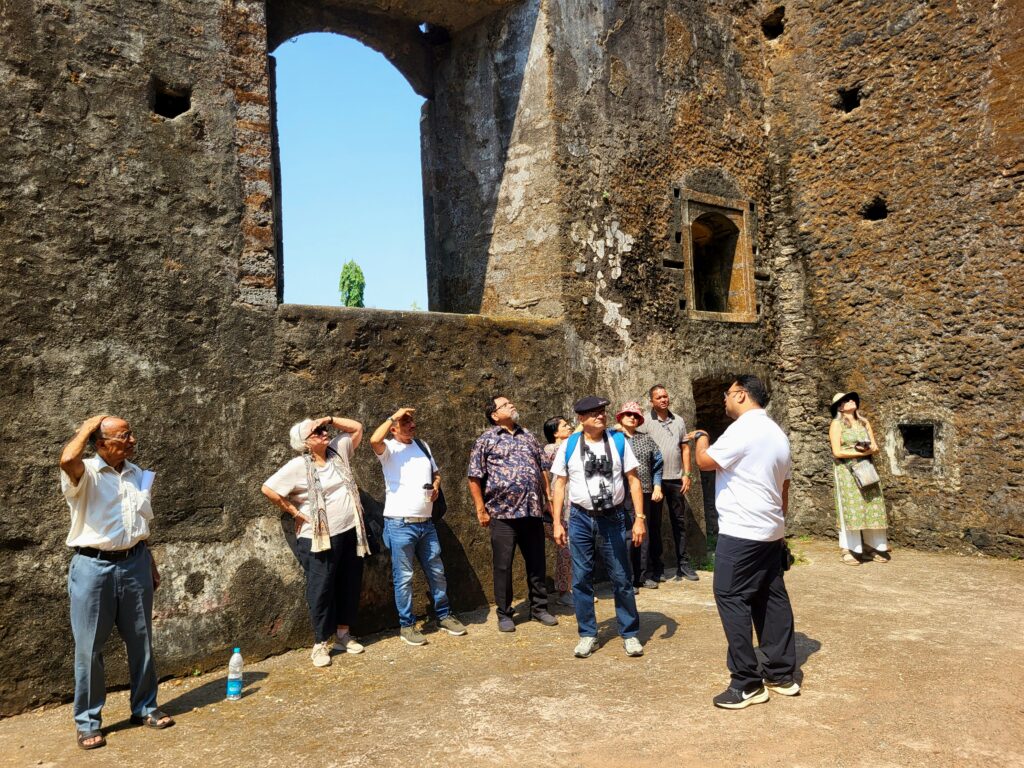
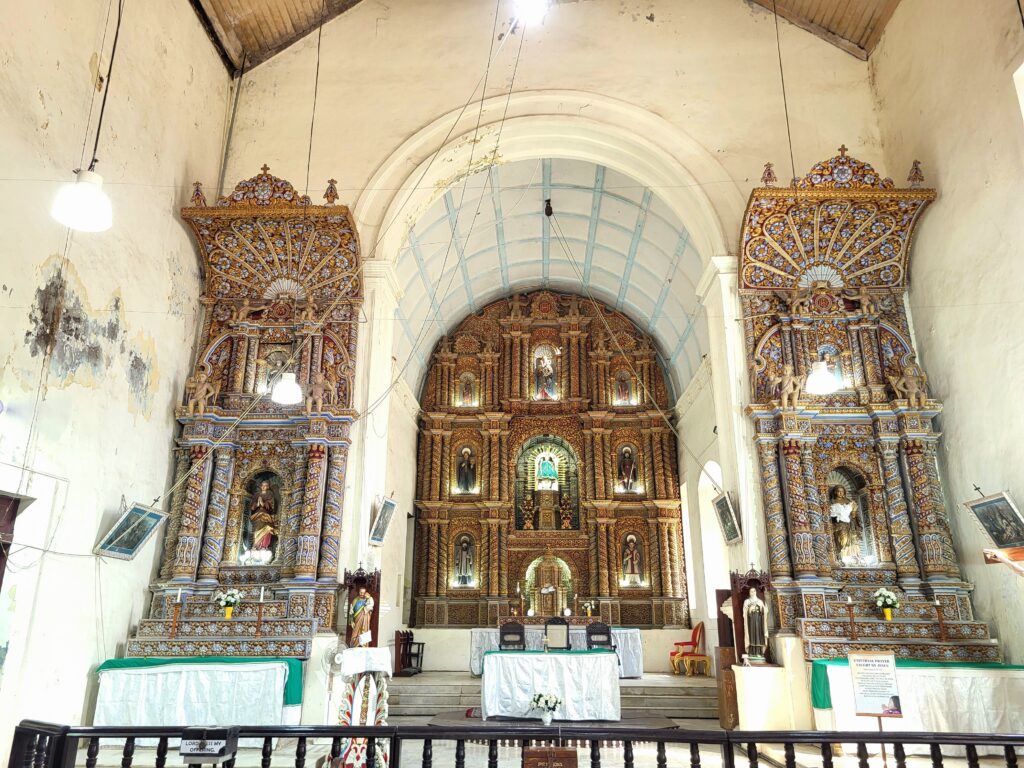
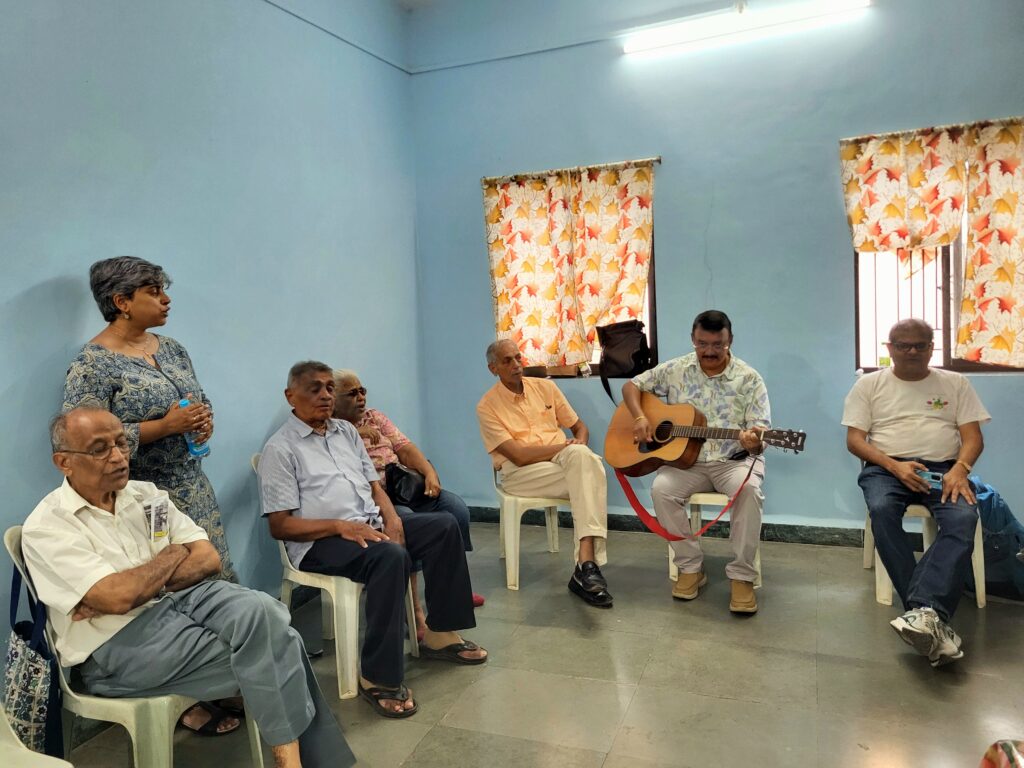
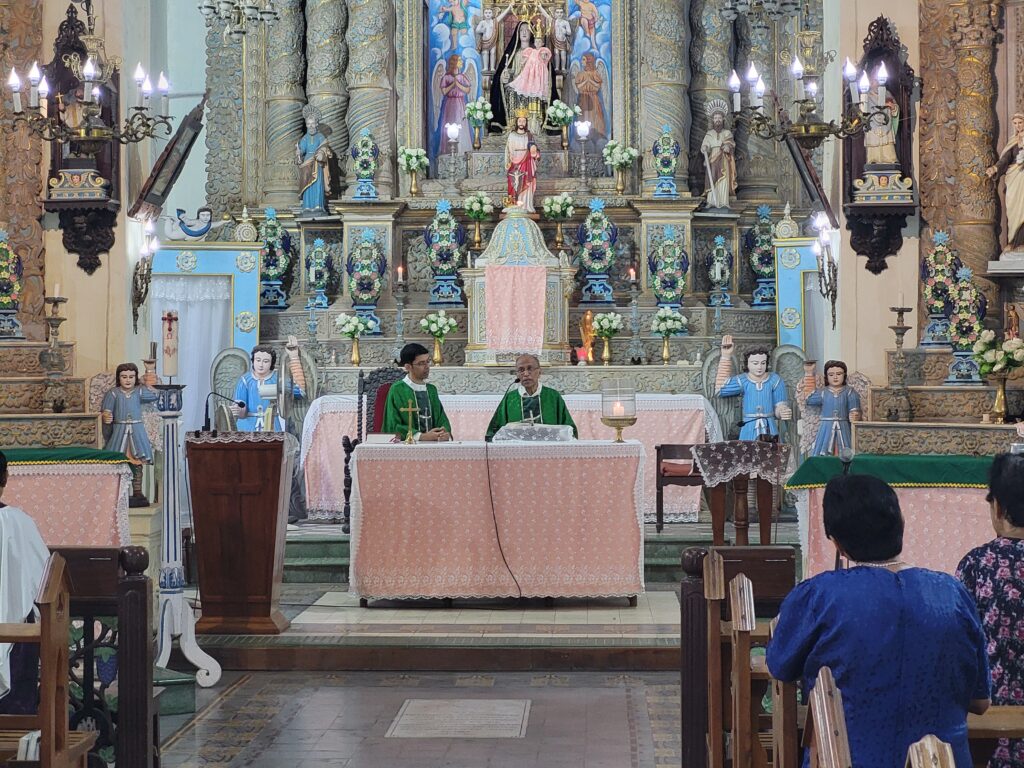
The first day began at the Cathedral of Bom Jesus, where participants learnt how integral the Jesuits were to Daman’s growth, including building part of its fortifications, running schools, minting coins and spreading the Christian faith. They studied the ornately carved altars, believed to have been moved from the Convent of St. Paul, the devotion to St. Roque during the plague of 1896, and the iconography of mermaids, nagas and atlantes. A Goan link emerged in the marble flooring donated by the Keni family in the 1950s. At the Chapel of Our Lady of the Rosary, the participants were awed by wall-to-wall gilded relief panels narrating the life of Our Lady from the Annunciation to the Assumption. The day continued at the ruins of the Dominican Convent, where a treasure hunt for the Dominican emblem of a dog bearing a torch delighted the group, and closed with a Damanese meal, folk songs by long-time residents and a Mass in Portuguese celebrated by Goan priest Fr. Eufemiano Miranda.
On the second day, the group visited the Chapel of Our Lady of Angústias, saved by local activists and the community when its land was sought for expansion of a sports facility; a powerful example of community-led conservation. At the Church of Our Lady of Remedies, they saw altars, a pulpit and relief panels rescued from Daman’s lost convents and colleges. In Nani Daman, the Chapel of the Holy Cross, founded by the maternal grandfather of artist Mario Miranda, offered a fitting tribute in his birth centenary year; Miranda was born a short distance away. The walk continued through the Gate of St. Jerome to the Church of Our Lady of the Sea and up onto the ramparts, where discussions turned to the fort’s construction, the slave and opium trades, and Bernardo Peres da Silva. That evening, the group joined the Feast of Our Lady of Fatima at the ruins of the Augustinian church, followed by a procession that brought them into warm contact with the local community.
The final day took participants to Udvada, home of the revered Parsi fire temple, its heritage streets, museum and bakeries which are a reminder of how other communities arrived in India and flourished over centuries.
Beyond its monuments, the tour revealed Daman as a living heritage, where faith, food, music and memory are carried forward by a close-knit community. By bringing people face to face with this legacy, MoCA hopes to inspire greater appreciation and care for India’s Indo-Portuguese heritage, and to strengthen bonds between Goa and the communities that share its history.
About the Museum of Christian Art
The Museum of Christian Art, located in Old Goa, houses one of Asia’s finest collections of Indo-Portuguese Christian art. Through exhibitions, research and heritage tours, it works to preserve and promote this unique artistic tradition.
– Clive Figueiredo
Secretary
Managing Committee
Museum of Christian Art