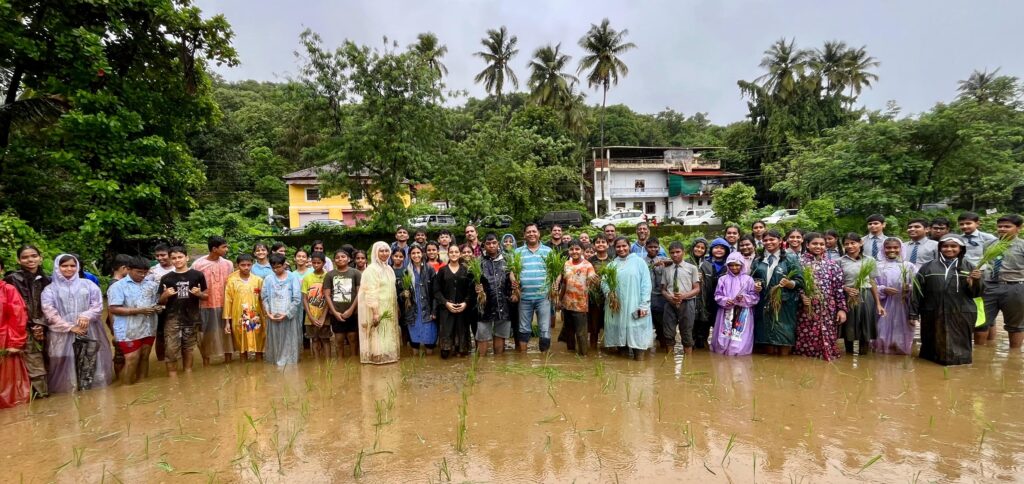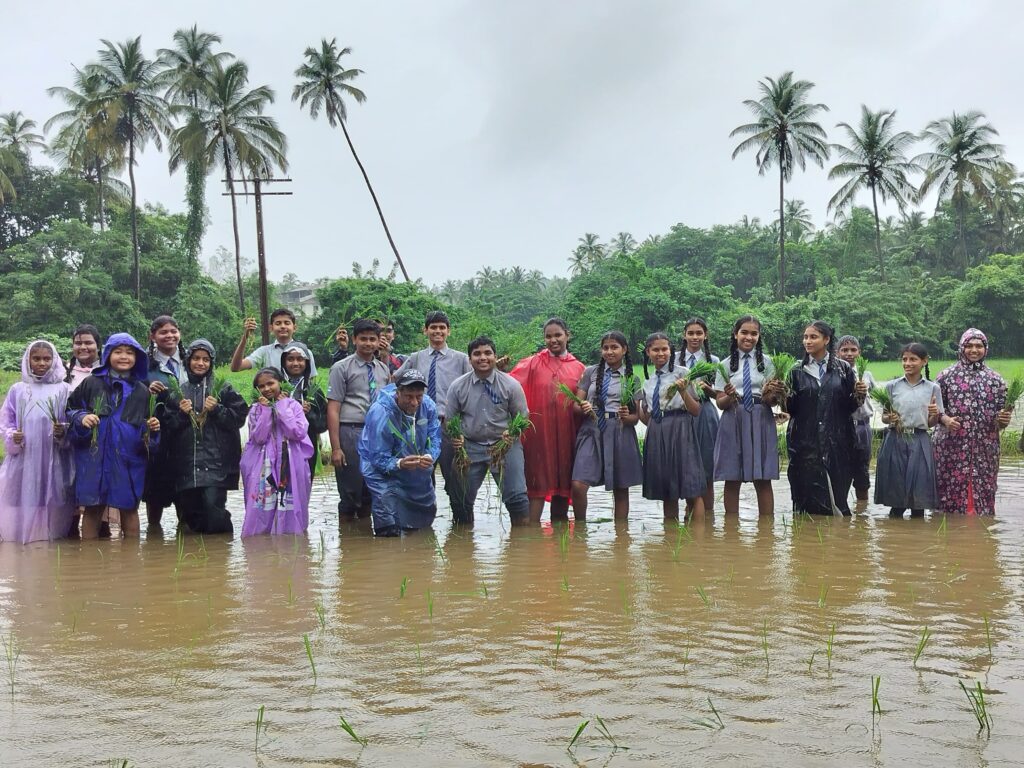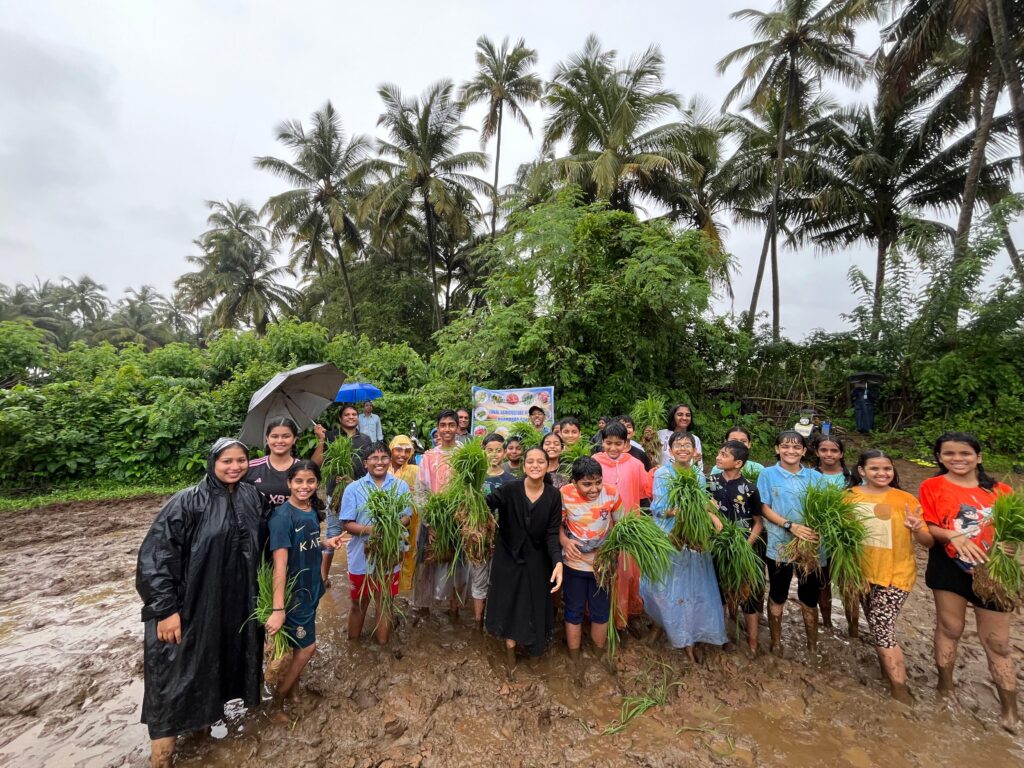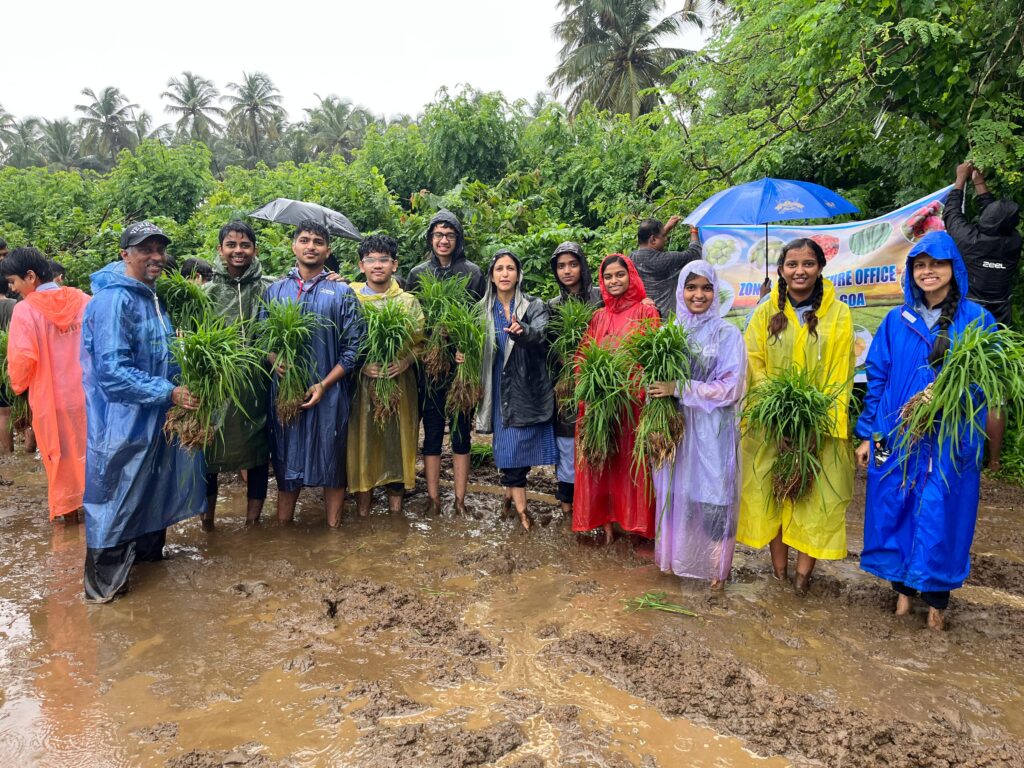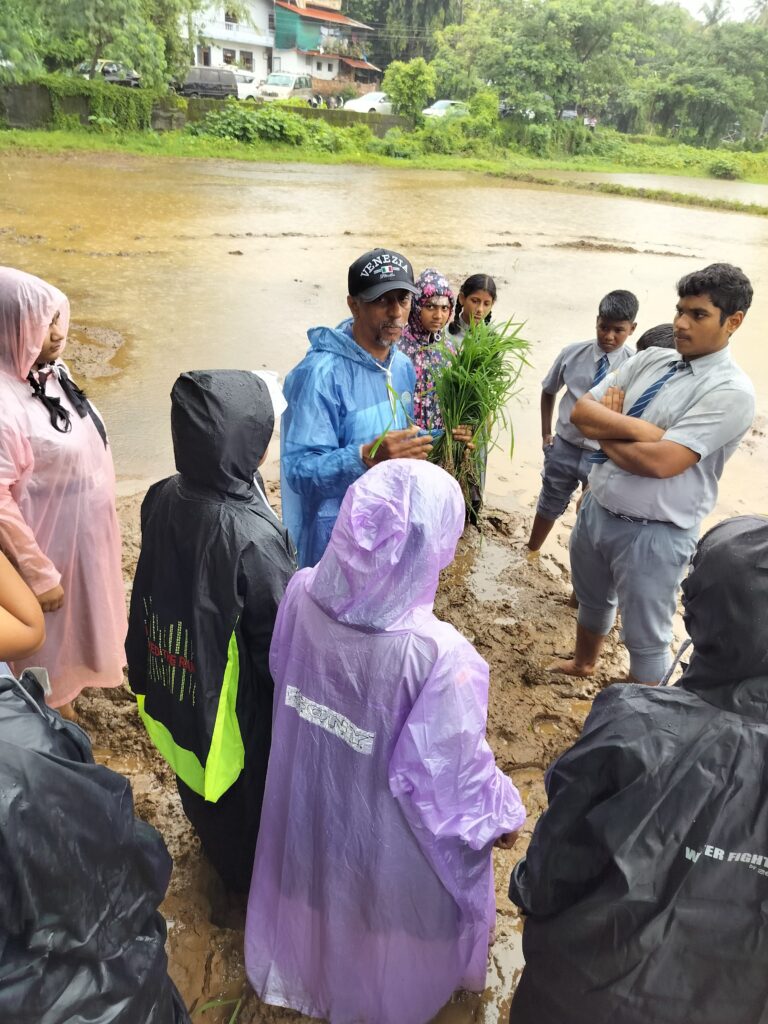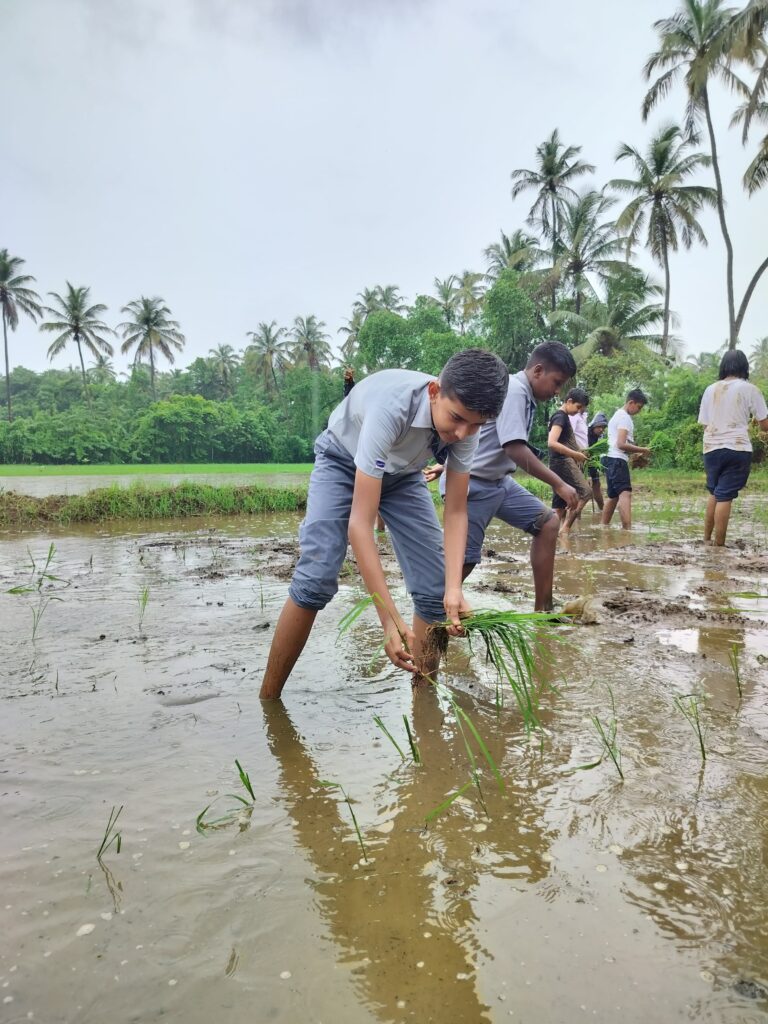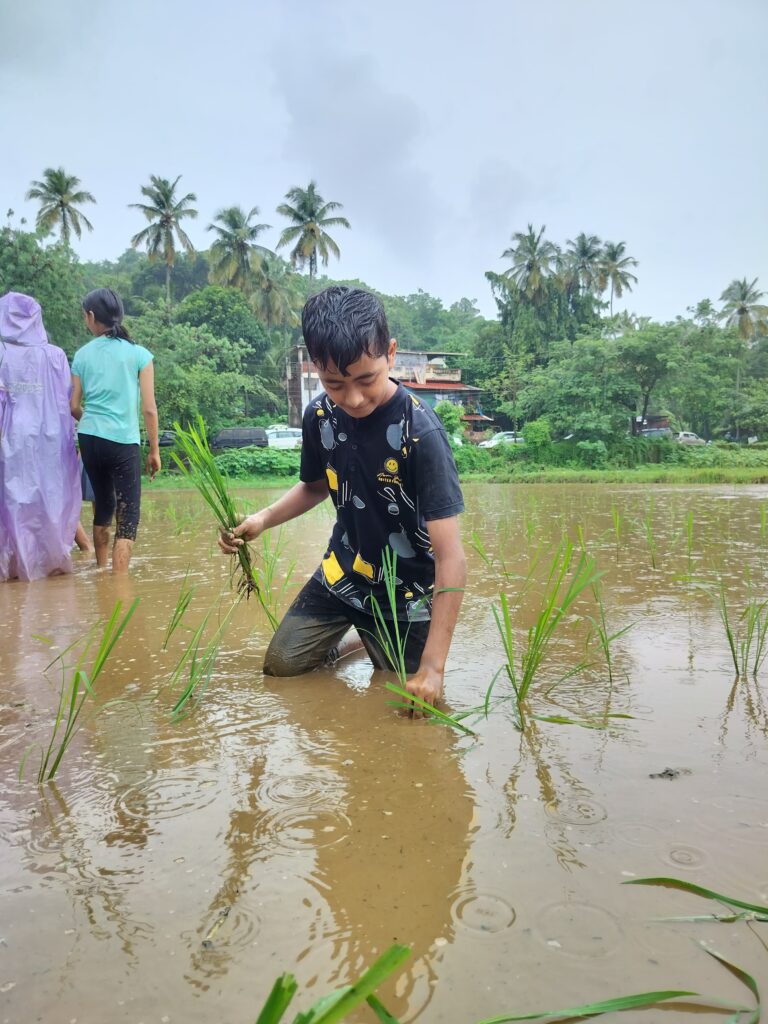
In a commendable effort to promote agricultural awareness and hands-on learning among students, the Chicalim Youth Farmers Club (CYFC) organized a Paddy Cultivation Activity on July 3, 2025. The initiative witnessed the enthusiastic participation of students from Regina Mundi High School, Navy Children High School, and MES College, with a total of 55 students accompanied by their respective faculty members. The activity aimed to ignite interest in farming among young Goans and provide experiential learning in traditional paddy cultivation.
The event commenced with a welcome address and introductory session by Fr. Bolmax Pereira, mentor of CYFC, who passionately spoke about the urgent need for youth participation in agriculture. He introduced key concepts like germination, types of paddy cultivation, and the contrast between mechanized and traditional methods.
The presence of distinguished agricultural experts from the Department of Agriculture elevated the learning experience. Among those present were Mr. Nilesh Vaigankar, Zonal Agriculture Officer, Mormugao, Mr. Mahesh, Assistant Agriculture Officer, Mormugao and Mr. Shariff Furtado, Agriculture Officer, South Goa District.
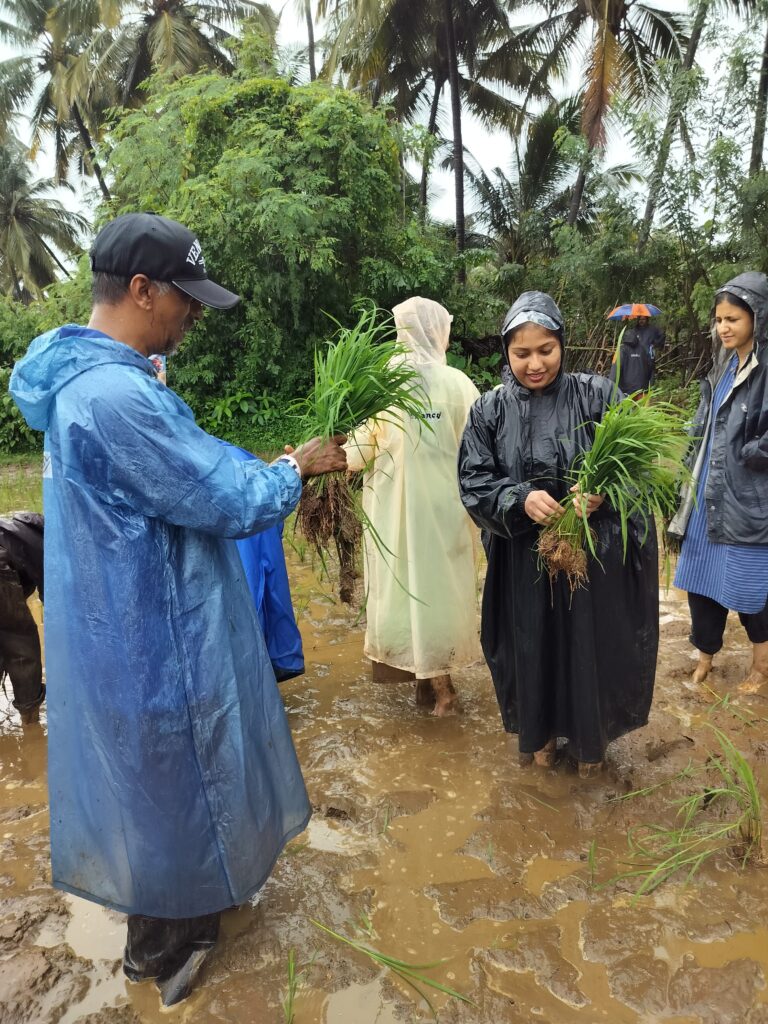
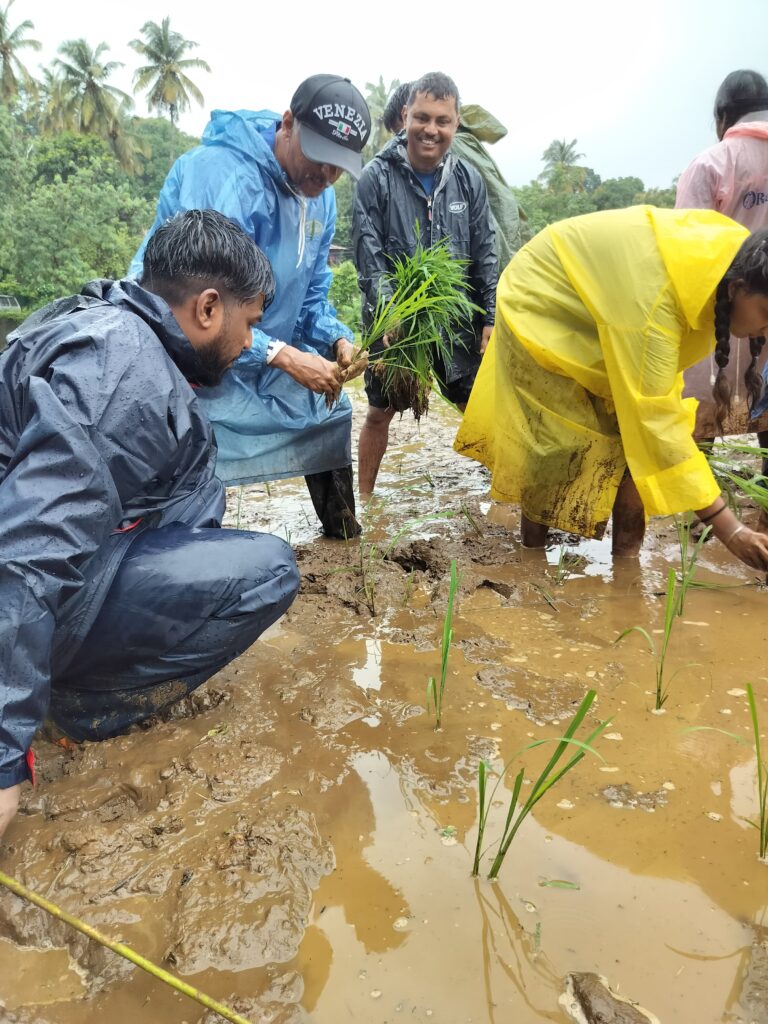
Mr. Vaigankar elaborated on the SRI method, highlighting its benefits in terms of yield, water efficiency, and soil health. The officers conducted an interactive session with students, addressing their questions and sharing valuable insights into sustainable farming practices
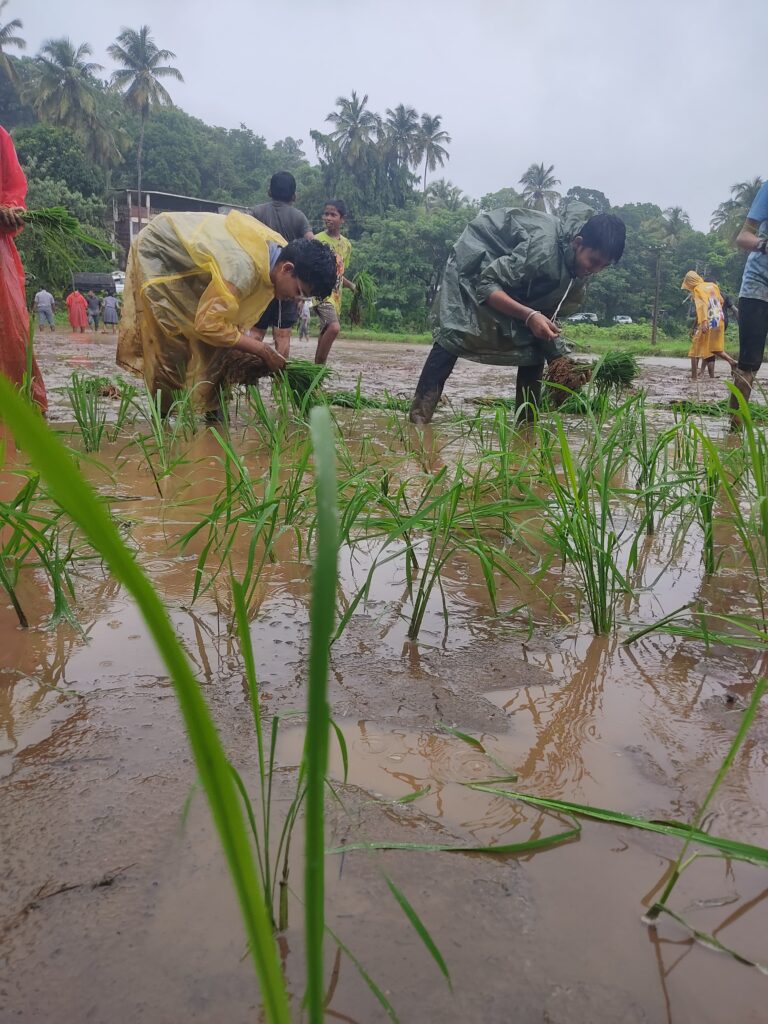
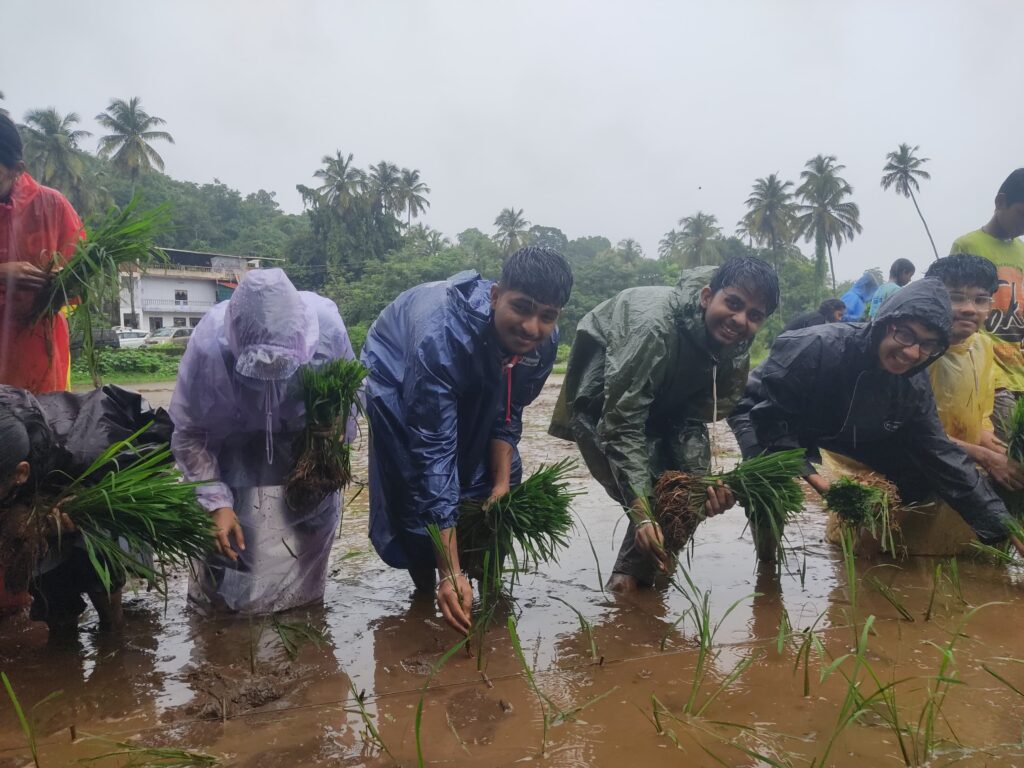
With sleeves rolled up and spirits high, the students stepped barefoot into the muddy field — for many, a first-time experience. Guided by the CYFC team and officers, they practiced the SRI technique and successfully planted paddy across 1,200 sq. meters of land.
The event was further honoured by the presence of Hon’ble Member of Parliament for South Goa, Capt. Viriato Fernandes, who joined the students in the field and engaged with them during the activity. He was warmly received by the CYFC President and interacted with the students, who shared their personal experiences. Deeply moved by their excitement, he lauded the efforts of CYFC and appreciated the students’ enthusiastic involvement. He emphasized the importance of such initiatives in fostering a sense of responsibility and connection with the land among the younger generation.
The event ended on a high note with students and teachers delivering heartfelt votes of thanks to CYFC and Fr. Bolmax, pledging continued support and wider participation in future events.
“We the teachers and students of Navy Children’s School would like to thank Fr. Bolmax for giving us the opportunity to participate in the transplanting activity. Our students have learnt the new skill of transplanting and are definitely going to come back for the harvest as well” said Ms. Sneha Mayenkar, a teacher from NCS, Chicalim.
Rhesa D’ Souza, a student of Eco Club from Regina Mundi School, Chicalim said “ We learnt the SRI method of transplanting today and we are happy to be in the field and learn something new. We would definitely like to come back to the fields and work with the CYFC members.”
“As both an educator and a member of the Chicalim Youth Farmers Club, I feel incredibly proud to witness our students stepping out of the classroom and into the field,” said Ms. Alisha Pereira, Eco Club in-charge at Regina Mundi High School and Treasurer of CYFC. “Today’s activity offered more than just an agricultural lesson — it gave our students a connection to the land, a sense of responsibility, and immense joy in learning by doing. Watching them ask questions, get their hands muddy, and enjoy the process reminded me why experiential education is so powerful. I look forward to organizing more such opportunities that blend environmental education with meaningful action.”
With muddy hands, full hearts, and new respect for the land, the students joined in a final resounding chant “JAI JAWAN, JAI KISAN!”
The day concluded with a traditional Goan meal comprising Rice Kanji (Pez), pickle, and dry salted fish, which was served to all participants. The meal, prepared using locally sourced ingredients, was well-received and added a cultural touch to the overall experience.